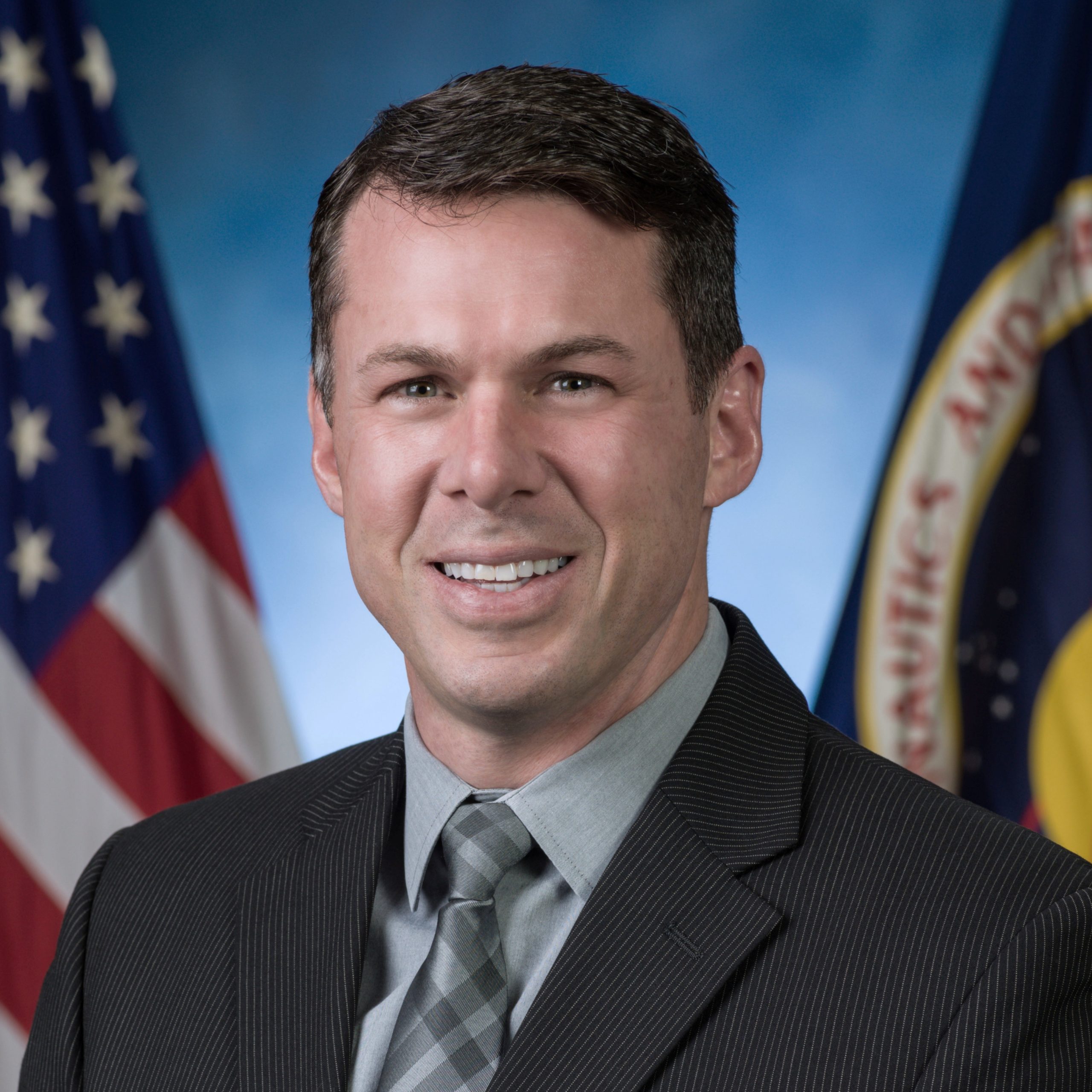
 Spanning 30 years of U.S. Navy and NASA federal service, he has served as an aerospace optometrist and clinician-scientist in a wide range of research, development, test, and evaluation (RDT&E) and clinical surveillance programs to optimize human ocular health, visual performance, and mission effectiveness in austere aerospace environments. He served as U.S. Navy Refractive Surgery Program Research Director (2006–2011). In addition, he served as Director of Joint Medical Test & Evaluation at the Defense Health Agency (2011-2014). His primary duties included creating the first Joint-Service First Aid Kit (JFAK) and revising DD-Form 1380 (Tactical Combat Casualty Care Card). From 2016–2020, he was detailed to the NASA Johnson Space Center (JSC) Space Medicine Operations Division as a DoD Aerospace Medical Liaison officer to support the investigations into a unique condition affecting the eyes, brains, and vision of astronauts during spaceflight: Spaceflight Associated Neuro-ocular Syndrome (SANS). Following Navy retirement (2020), he continues to serve NASA as SANS Clinical Lead (Eyes & Vision). He also serves as Chair of the SANS Sub-working Group of the Multilateral Medical Operations Panel (MMOP), alongside colleagues from NASA’s International Partners; as co-investigator on four NASA SANS research studies; and as subject matter expert (SME) and Remote Guider for ocular data collections occurring onboard the International Space Station (ISS).
Dr. Brunstetter earned his Doctor of Optometry, Master of Science, and Ph.D. degrees from the Ohio State University, and an Executive MBA from the Naval Postgraduate School. He was winged as a Navy Aerospace Optometrist in 2002 and earned Board Certification as an Aerospace Physiologist in 2006. He is a Fellow of the Aerospace Medical Association (AsMA; 2009) and American Academy of Optometry, and member of the Space Medicine Association, Aerospace Physiology Society, American Optometric Association, and Association of Armed Forces and Federal Optometric Services. His awards include the Navy Commendation Medal (four times; gold stars in lieu of second through fourth awards), U.S. Navy Junior Optometrist of the Year Award, the Army Achievement Medal, the Paul Bert Award from the Aerospace Physiology Society, selection as a U.S. Navy candidate for the NASA Astronaut Corp, the Defense Meritorious Service Medal, four NASA JSC Group Achievement Awards, the American Optometric Association’s President’s Award, NASA’s Exceptional Achievement, JSC’s Superior Accomplishment, and NASA’s Superior Achievement Awards, the Orion Award from the Association of Armed Forces and Federal Optometric Services, and the Thomas J. and Margaret D. Tredici Award from AsMA.